Project Information

Unit Economics: The Number Every Founder Should Know Before Scaling

Growth doesn’t solve weak economics. It makes the weaknesses more expensive.

The Mistake Most Businesses Make Before Scaling

Revenue starts growing. More customers come in. Orders increase.

So the next step feels obvious, hire more people, increase ad spend, expand inventory.

The thinking is usually: “We’ll figure out the numbers as we grow.”

But growth doesn’t solve weak economics. It simply makes the weaknesses more expensive.

Before you think about scaling, ask yourself one question:

Do you actually know how much profit you’re making from each sales order?

If the answer isn’t clear, it’s time to understand your unit economics.

5 Numbers Every Founder Should Track

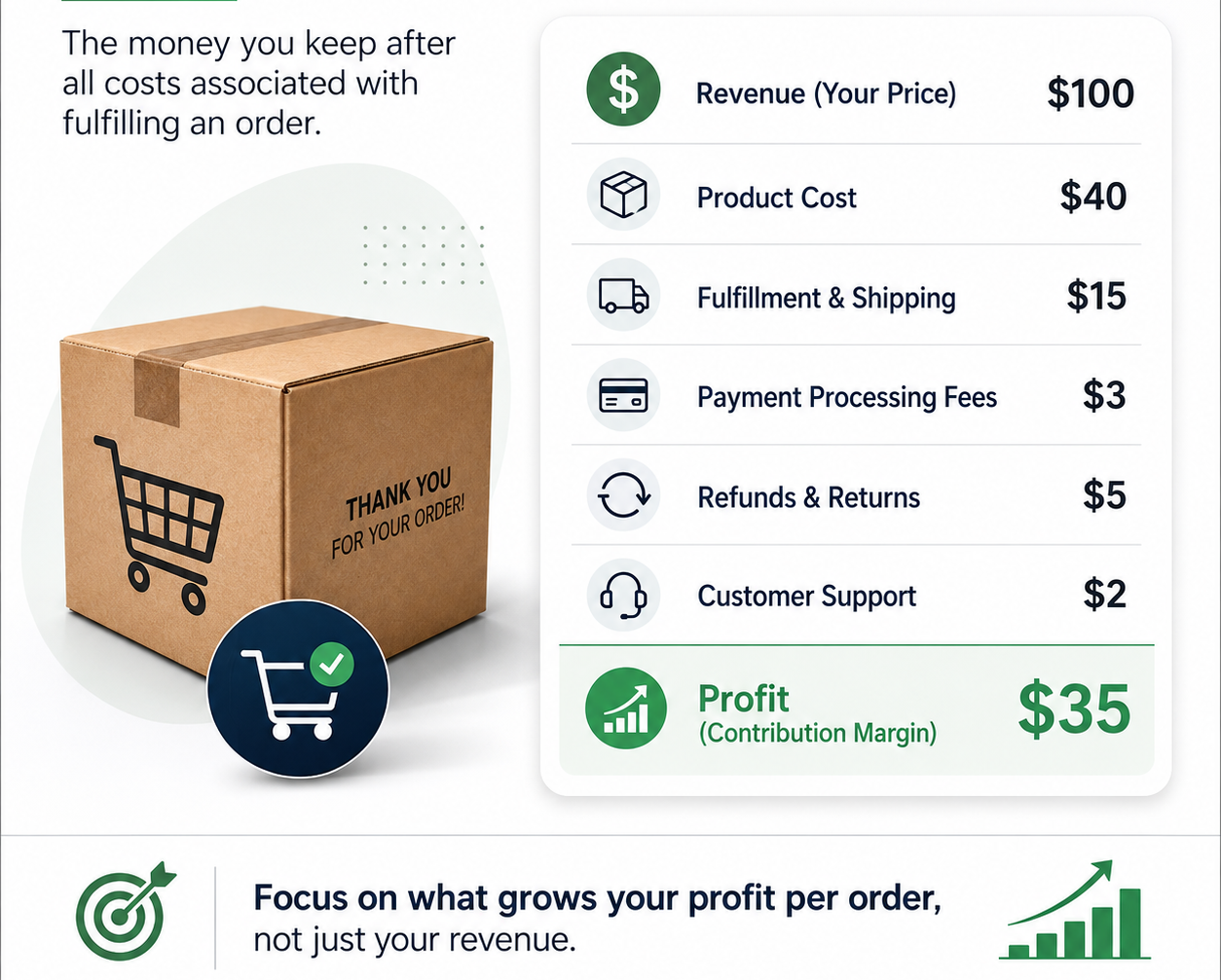
1. Contribution Margin:

After covering product costs, fulfillment, payment fees, refunds, and support, how much is actually left? This is your real profit per order. If this number is thin or negative, no amount of volume will save you.

2. Customer Acquisition Cost (CAC):

How much does it really cost to acquire one customer? Include everything, ads, agency fees, sales costs, and software. Most businesses underestimate this number significantly.

3. Lifetime Value (LTV):

What profit does a customer generate over their entire relationship with your business? A one-time buyer and a repeat customer look the same on day one. They look very different a year later.

4. LTV:CAC Ratio:

A healthy benchmark is around 3:1. If you’re well below that, scaling becomes much harder. This single ratio tells you whether your business model is fundamentally sound.

5. CAC Payback Period:

How quickly do you recover the money you spent acquiring a customer? Faster recovery means healthier cash flow and more room to grow without burning through capital.

Don't Just Look at the Business as a Whole

Break your numbers down by product, customer segment, and marketing channel.

You’ll often find that one product is driving most of the profit while another is quietly eating it away. One channel might be bringing in customers at a fraction of the cost of another.

The businesses that scale successfully aren’t always the fastest-growing. They’re the ones that understand their numbers before they pour more money into growth.

If someone asked you for your CAC, LTV, and contribution margin today, could you answer without opening a spreadsheet?

Ready to Understand Your Numbers Before You Scale?

We help e-commerce founders build the financial clarity they need to scale profitably, not just fast.