Are you ready to grow up your business?


Project Information
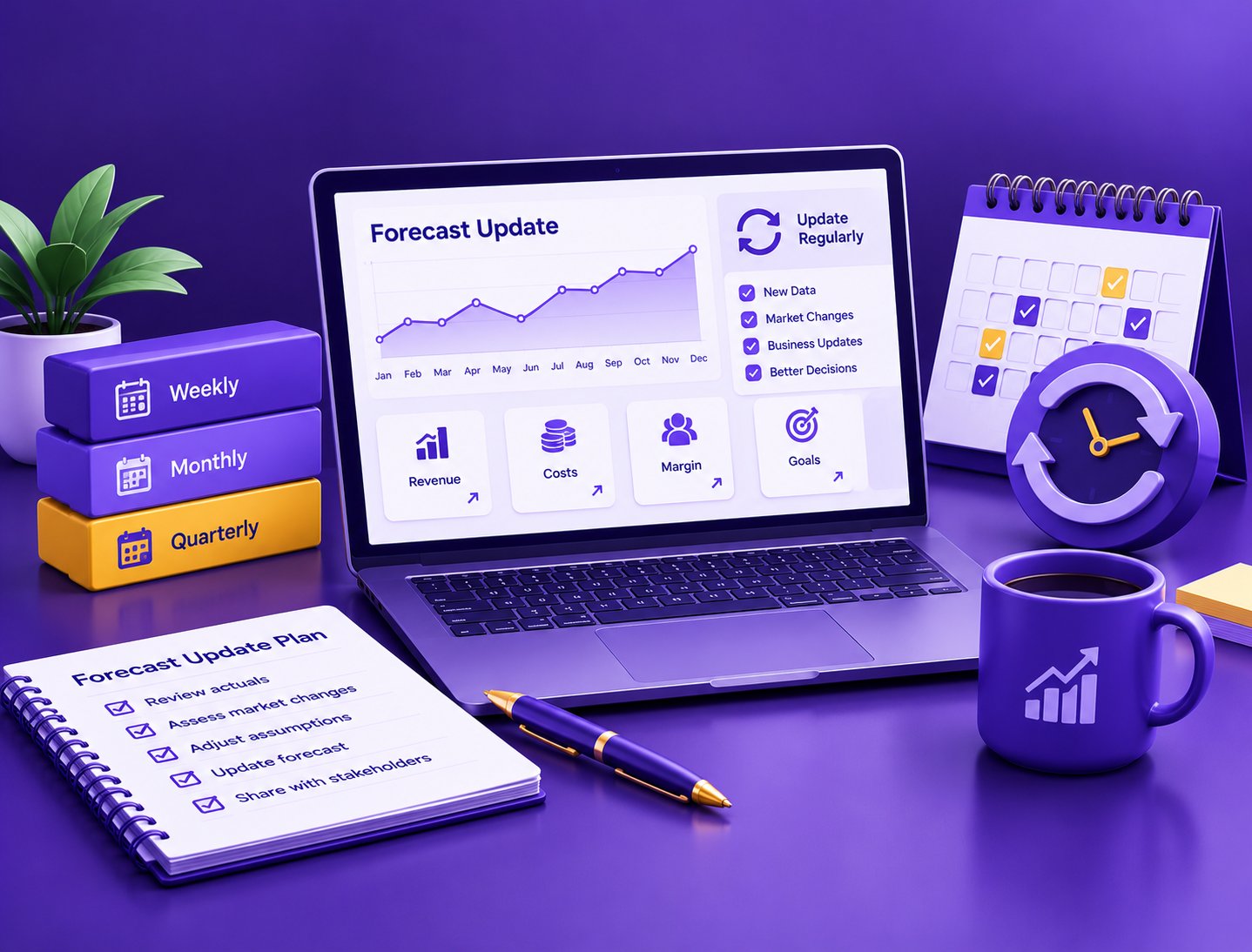
Most businesses set a budget at the start of the year and treat it like a contract. Then, somewhere around September, they realise the numbers on the page bear no resemblance to the world they are actually trading in.
This is the problem with static financial planning. Markets shift. Clients leave. New contracts land unexpectedly. Staff change. A forecast that was accurate in January can be dangerously misleading by June if it has never been revisited.
So how often should your business actually update its forecast and does one answer fit every business?
The short answer is: it depends on your business model, your growth stage, and how quickly things change around you. But there are three clear rhythms that work well for most businesses, and understanding each one helps you choose or combine the approach that fits yours.
The Three Forecast Update Rhythms
Rhythm 1: Monthly Rolling Forecast
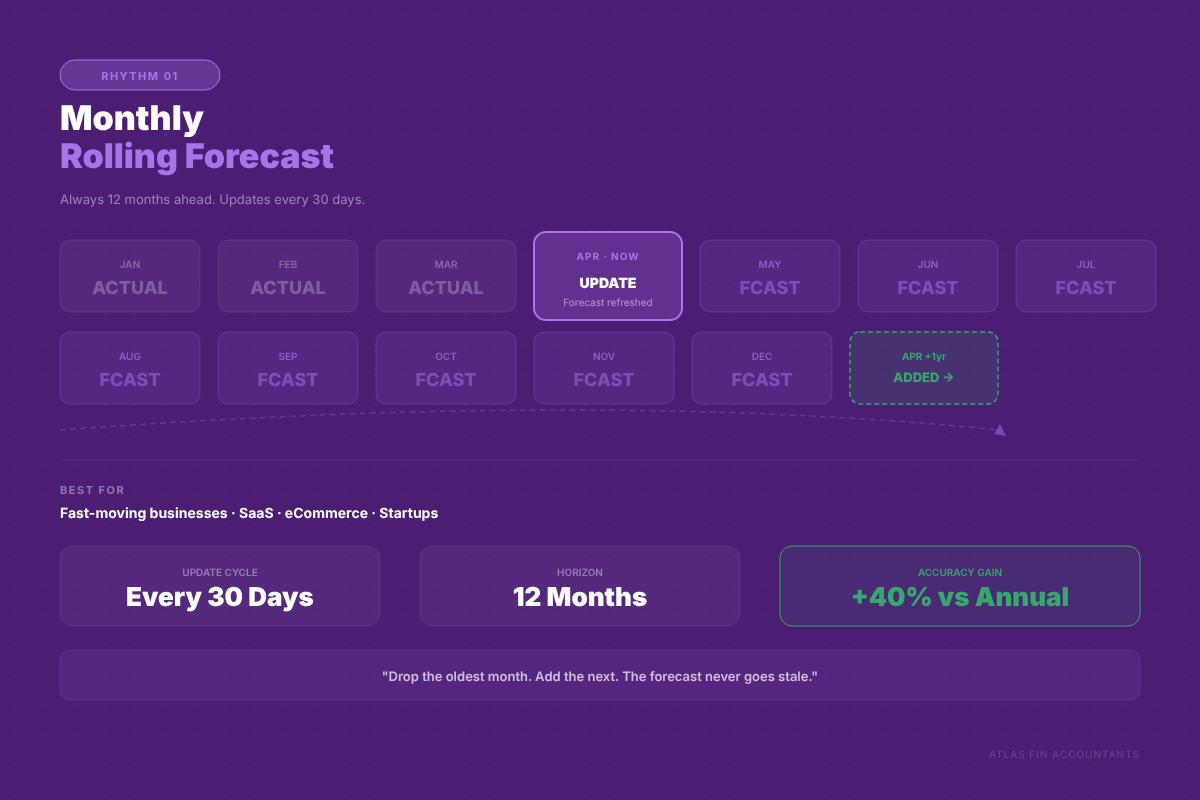
For fast-moving businesses, a monthly rolling forecast keeps your numbers current and your decisions sharp. Each month, the oldest period drops off, a new one is added, and assumptions are refreshed across the full 12-month window.
This approach works well for:
▶ SaaS and eCommerce businesses with fluctuating monthly revenue
▶ Startups monitoring burn rate and runway closely
▶ Businesses where cash flow changes quickly month to month
▶ Any company that needs to act fast when conditions shift
A monthly update does not mean rebuilding the model from scratch. It means reviewing last month’s actuals, adjusting current assumptions, and rolling the horizon forward typically a structured half-day with your accountant or finance lead.
The key benefit: Maximum visibility, minimum lag. Your decisions are always based on data no older than 30 days.
Rhythm 2: Quarterly Financial Forecast Review
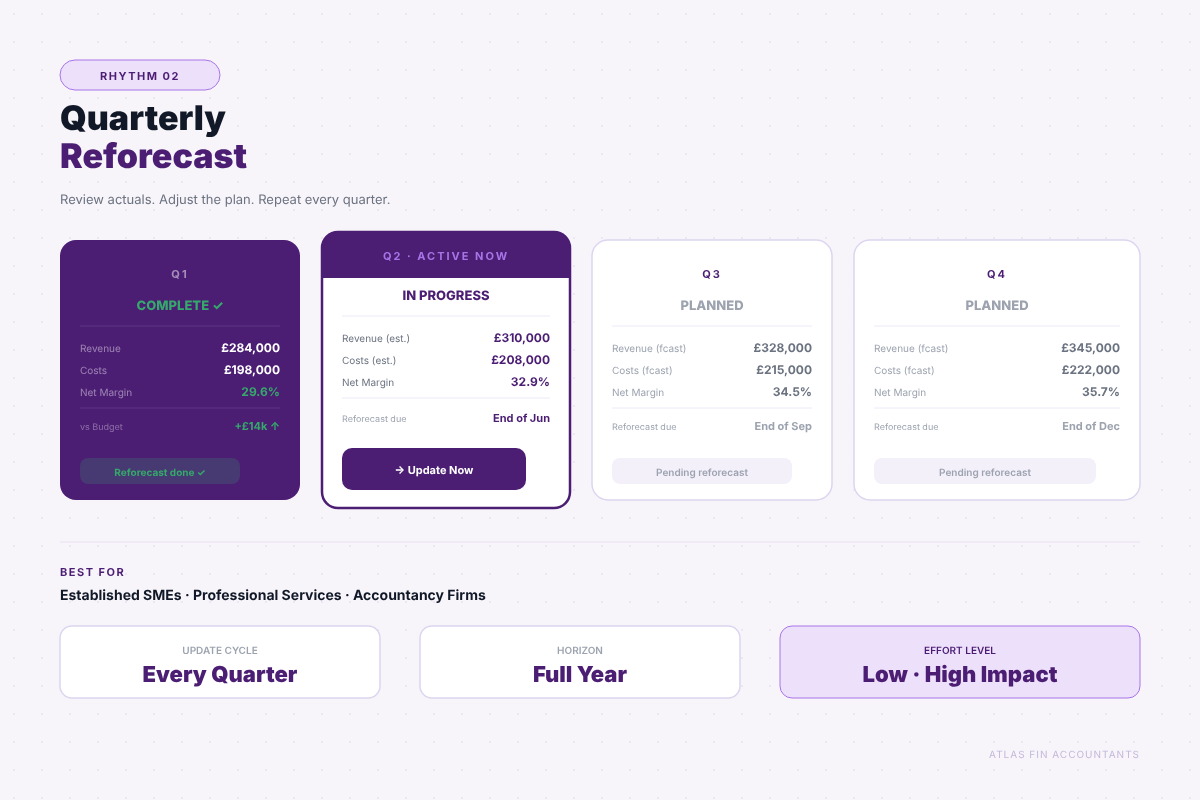
For more established businesses, a quarterly reforecast strikes the right balance between rigour and efficiency. At the end of each quarter, actuals are reviewed, the original budget is compared against what really happened, and the remaining quarters of the year are updated to reflect the new reality.
This approach works well for:
▶ Professional services firms with recurring client relationships
▶ SMEs with relatively stable revenue and cost structures
▶ Businesses that report to a board, investors or lenders on a quarterly basis
▶ Any company where the cost of a full monthly remodel outweighs the benefit
Quarterly reforecasting typically involves a structured variance analysis, looking at where actual figures diverged from the plan, understanding why the gap appeared, and deciding whether the rest of the year needs to be adjusted as a result.
Done well, this process also feeds directly into strategic planning helping leadership decide where to allocate budget, where to pull back, and what the year-end position is likely to look like with several months still to run.
Most businesses find that a consistent quarterly rhythm builds financial discipline across the team. When everyone knows a review is coming, actuals are tracked more carefully, spending decisions are made more deliberately, and surprises at year-end become far less common.
The key benefit: Low time investment, high strategic impact. Four updates a year is enough to keep the full-year picture accurate without consuming management time every month.
Rhythm 3: Event-Triggered Forecast
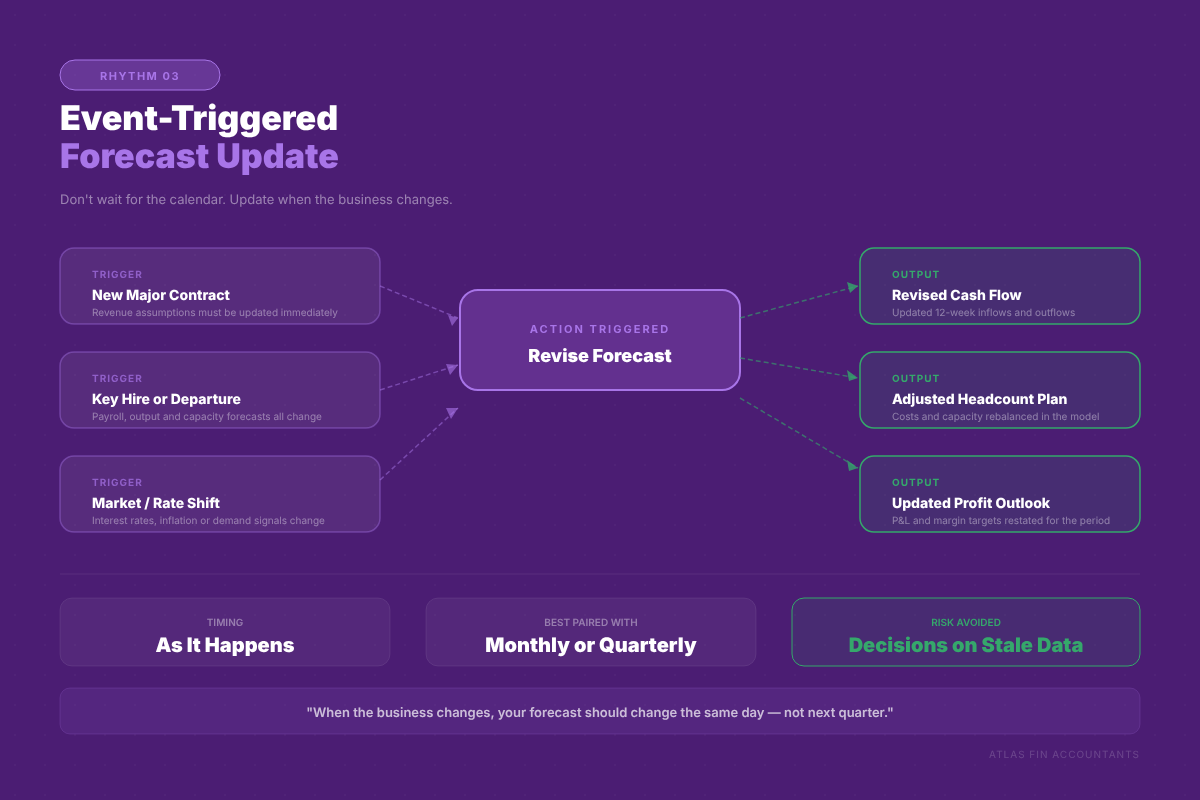
For any business, certain changes make the existing forecast immediately inaccurate. An event-triggered update means revising the forecast the moment something significant happens not waiting for the next scheduled review.
This approach works well for:
▶ Businesses that have just won or lost a major client or contract
▶ Companies going through a key hire, departure or headcount change
▶ Any business affected by a market shift, rate change or supply disruption
▶ Teams that need the forecast to reflect today’s reality, not last quarter’s
Event-triggered updates sit on top of your regular rhythm. They are not a replacement they are a safety net that prevents stale data from driving live decisions between scheduled reviews.
The key benefit: No decision gets made on outdated assumptions. When the business changes, the forecast changes the same day.
Which Approach Is Right for Your Business?
Most businesses benefit from a combination. A monthly or quarterly rhythm forms the backbone of your forecasting practice. Event-triggered updates then layer on top when something significant changes in between your scheduled reviews.
Think of it this way:
- Monthly rolling = the right choice when you need maximum visibility and speed
- Quarterly reforecast = the right choice when you want discipline without overhead
- Event-triggered = always active, regardless of which primary rhythm you choose
- The worst outcome is no rhythm at all, forecasting once a year, filing it away, and making decisions without ever updating it. A forecast is not a document. It is a live, working model of where your business is headed. Treat it like one.